OVERVIEW
During the COVID-19 pandemic, I observed myself and other students struggling to manage and find information to navigate a high-stress and rapidly changing world; prompting me to design a centralized, reliable solution.
YEAR
2021
TEAM
Me, Myself, and I
ROLE
UX Designer
PROBLEM
People were facing an overwhelming influx of rapidly changing information, needing to find and manage it effectively in high-stress situations while juggling multiple disconnected tools and health-related resources.
Rapid yet unreliable information
Social media platforms offered rapid updates, but lacked accuracy causing confusion and eroding trust.
Friction in scheduling appointment
Individually searching and go through individual locations to find available appointments was time consuming.
Repetitive use of health info
Daily symptom checks and use of vaccination cards required organized health data, which proved difficult to manage.
RESEARCH PROCESS
Methods
User interviews
Personas
Affinity diagramming
Task shadowing
Survey
Key Focus Areas
What information related to COVID-19 are students looking for?
What are the pain points associated with managing and finding info?
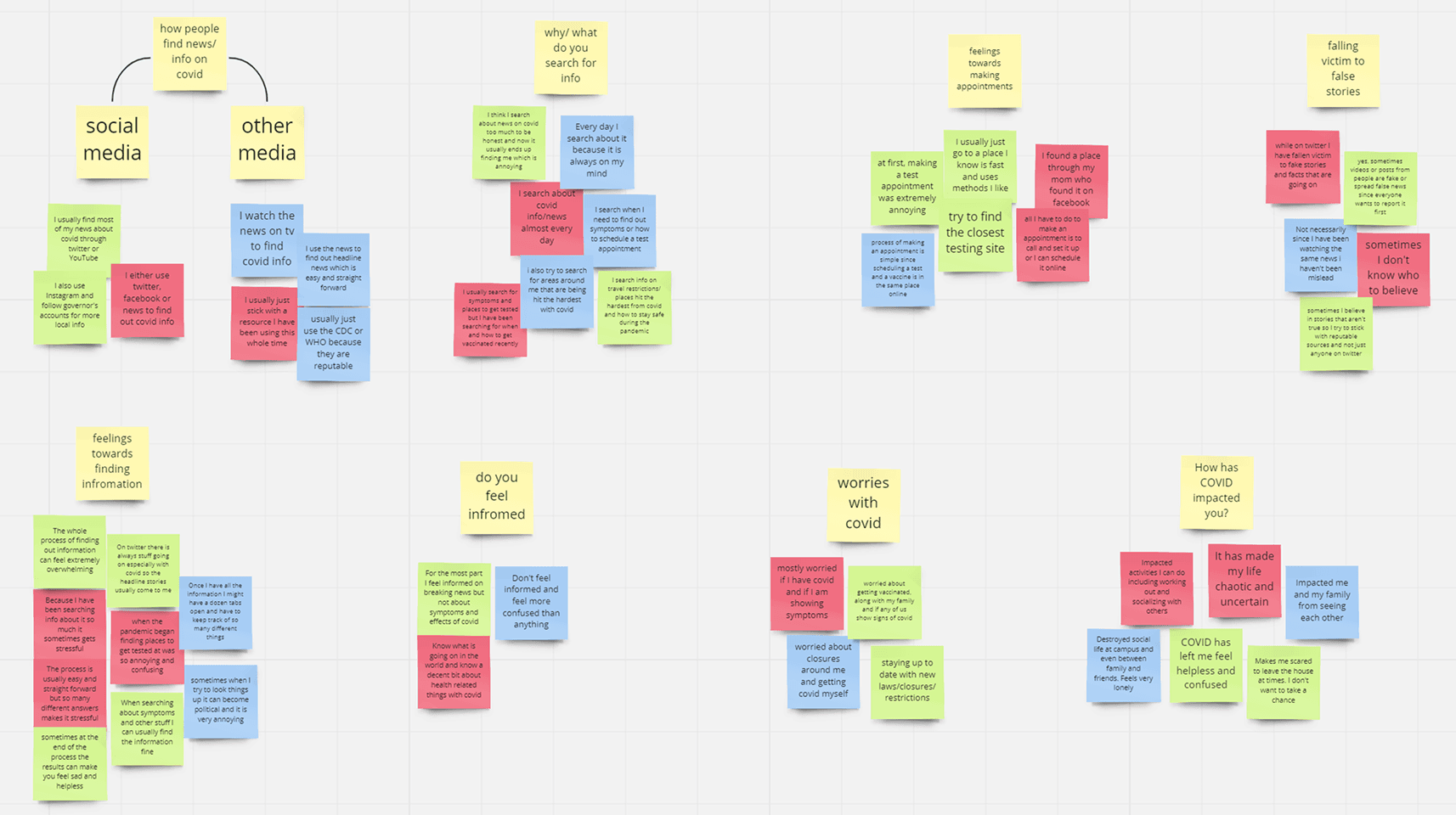
AFFINITY DIAGRAMMING PAIN POINTS
INSIGHTS
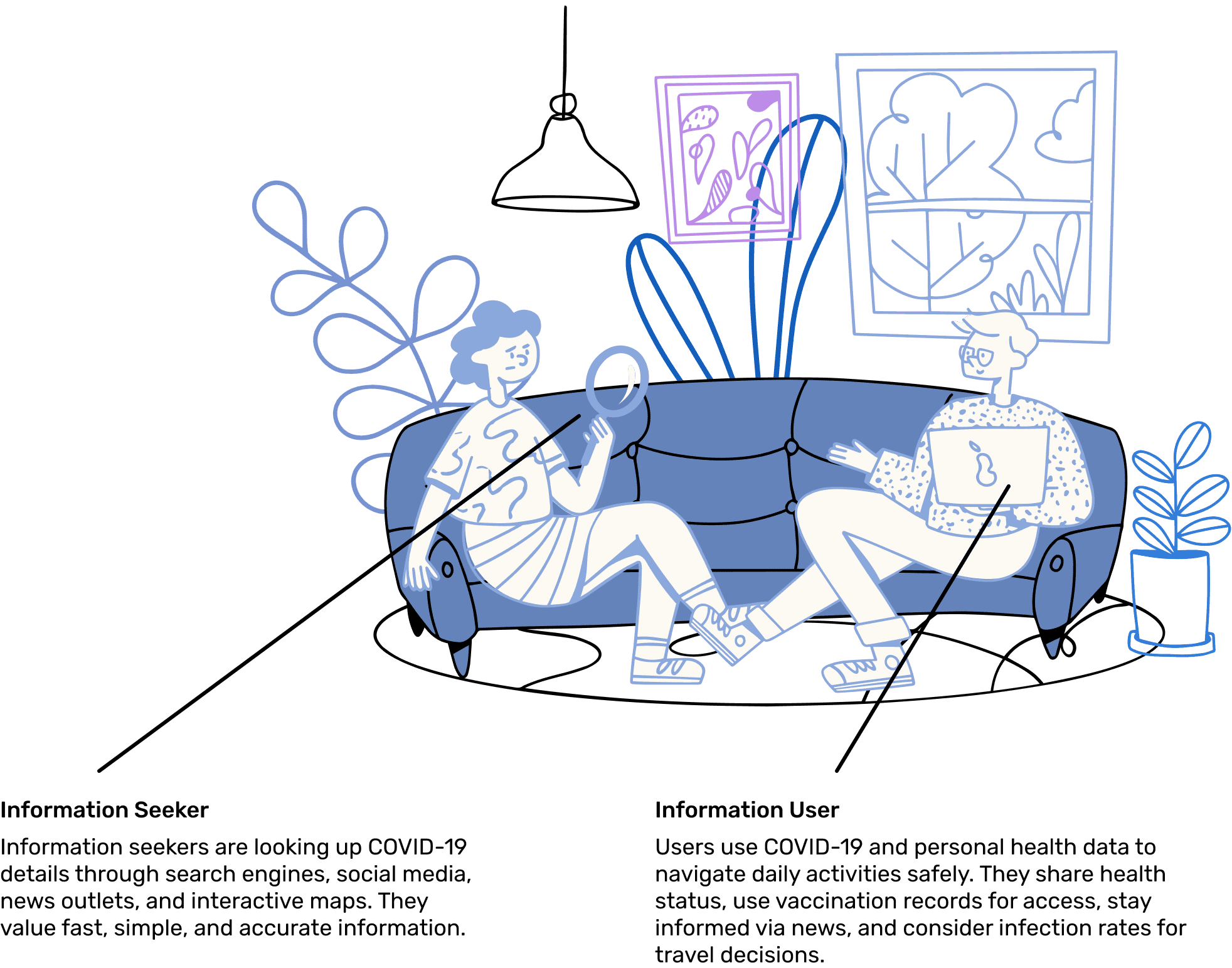
People wear two hats: The Information Seeker & and Information User
The research showed that when seeking info students were most commonly using social media such as Twitter or using search engines and data tables. They would use this information to schedule appointments (vaccines and COVID-19 tests), make travel decisions, and to generally be informed. Some sought data from personal records like vaccination cards and symptom checkers to attend class and events.
People valued local and major headlines to stay informed
News types and categories were identified and categorized by participants who were given predetermined categories and created their own.

Key findings
Social media most used & untrustworthy
Social media was the primary source for general news (80%, n=30), while search engines were most used for local information (90%, n=30). Notably, (70%, n=30) of participants reported encountering fake or questionable information using social media.
Path to schedule is tedious
Students often had to search for clinics and individually assess availability, spending on average 3-5 minutes inputting info and repeating the process 3-5 times. This made scheduling a time-consuming and tedious process.
Managing health info is overwhelming
Students expressed that they often had to input their symptoms into a symptom checker for each class they had for the day. This became repetitive and tedious. Students also noted having to show vaccination cards or proof of with some worried about losing it.
News and info became stressful
With all the information that was rapidly being thrown around ,it became a very stressful time for many and a large group of participants expressed wanting to have an option to "take a break" or even filter out COVID-19 news.
SOLUTION
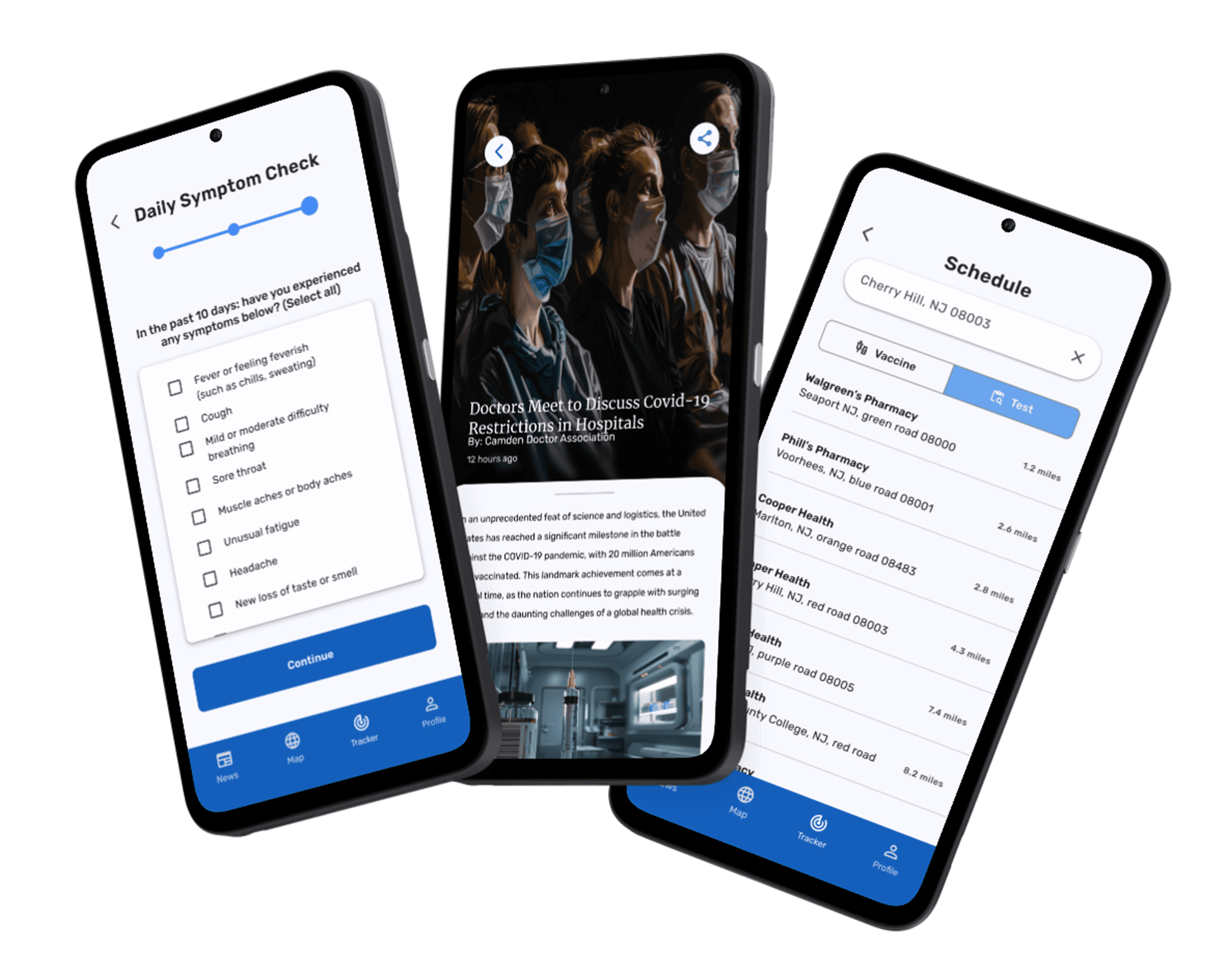
I decided to go in the direction of an app to house all of the information seeking people might take within one area to ensure vetted resources and and easy way to check and store COVID-19 related health information for use at any time.
Find Accurate Information Efficiently
The news page shows updated, vetted (from reliable organizations and news outlets), and important news depending on a user's location. These are from government-based publishers and major news publishers. Users can browse or search to easily find specific news articles or categories.
Manage and Use Your Info With Ease
The tracker page enables you access a daily symptom checker with easy sharing options, along with a dedicated section for finding nearby testing & vaccine sites. This allows for easy application and search of local availability without a tedious process.
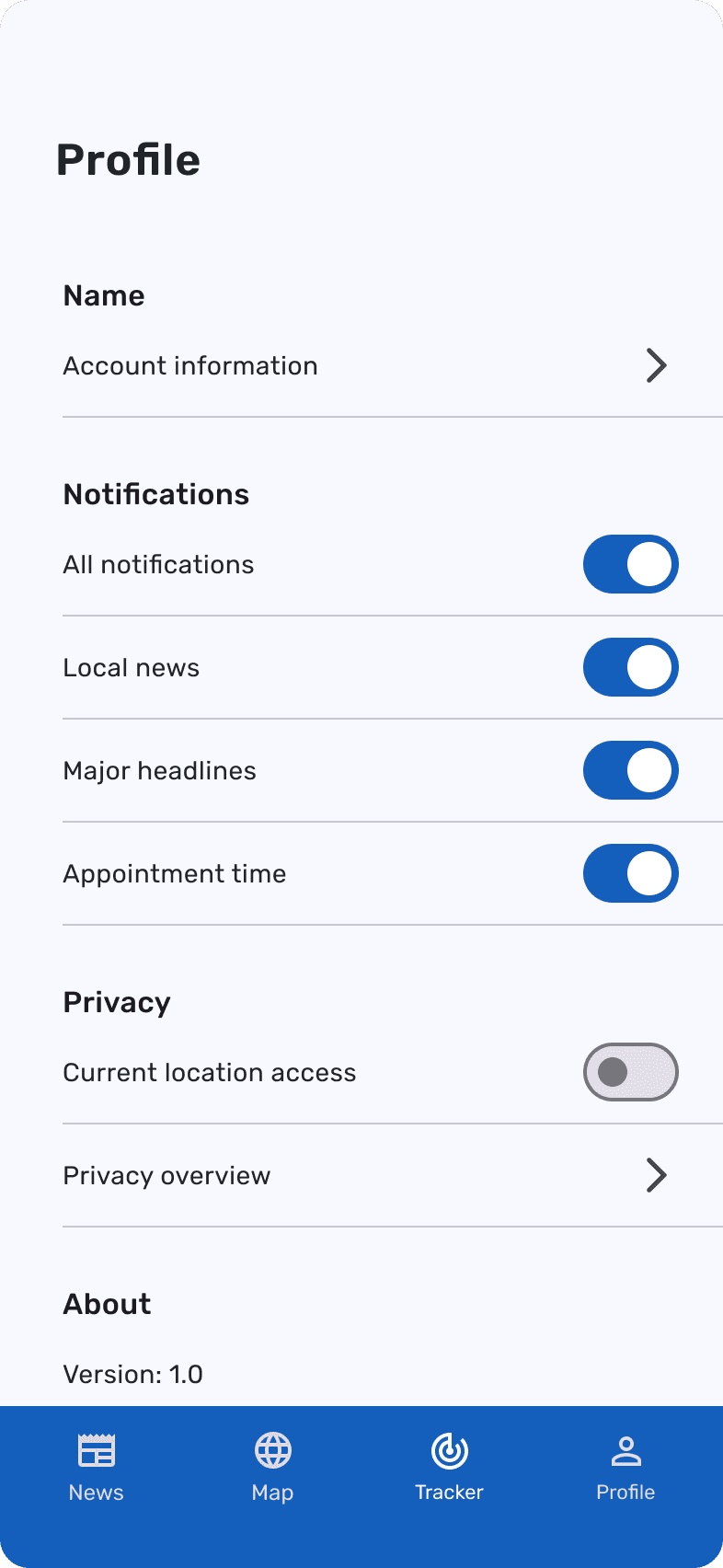
Ability to easily turn off all notifications on the app
Giving users the ability to turn off all notifications means that they won't have to be overwhelmed by the berage of info going on and can choose to personalize their experience if need be.
OUTCOME
Overall, the concept was well received, with participants valuing the ability to find and manage reliable information while quickly scheduling appointments in one centralized experience.
During usability testing, (80% n=10) found their overall information seeking experience improved. (60% n=10) found the daily symptom checker convenient for expediting their process and tracking their health. (90% n=10) of participants said that they would trust information coming from this platform more than ways they gather resources.
In an effort to create more convenience I tested the ability to store user's vaccination cards, which received (60% n=10) disapproval citing worries around health data being exposed. This part was promptly removed afterwards.