OVERVIEW
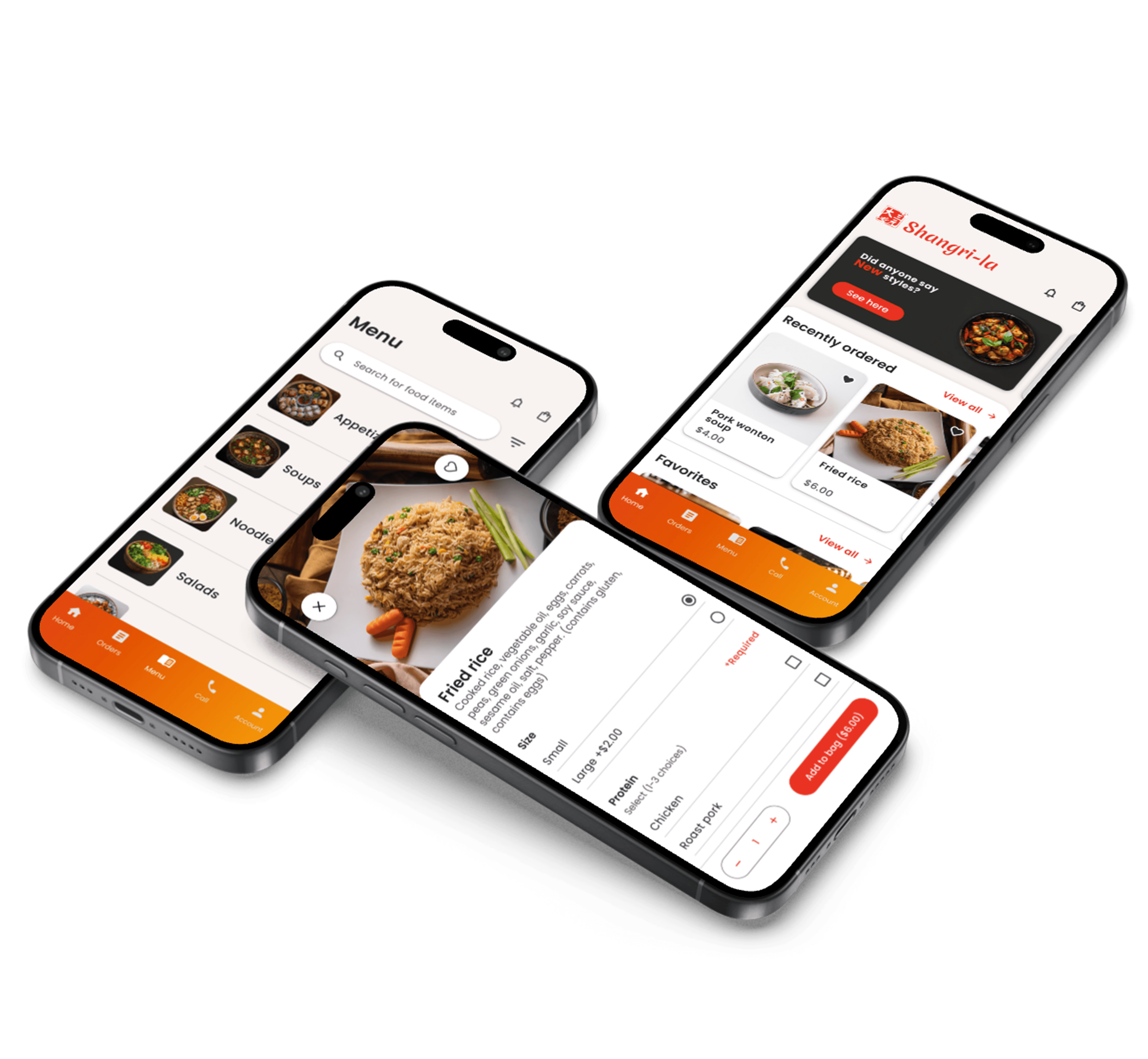
During the COVID-19 pandemic, I observed customers at a local restaurant struggling to order food and access menu information—prompting me to design a mobile solution that reduced phone orders while streamlining the overall ordering experience.
YEAR
2022
TEAM
Me, Myself, and I
ROLE
Product Designer
PROBLEM
During the COVID-19 pandemic, Shangri-la (a local restaurant) shifted to phone-only ordering, resulting in reduced human interaction, long wait times, difficulty exploring menus, and challenges communicating promotions and updates.
Long wait times
Order wait times often reached 5–15 minutes, overwhelming staff and degrading the customer experience.
Overwhelming menu
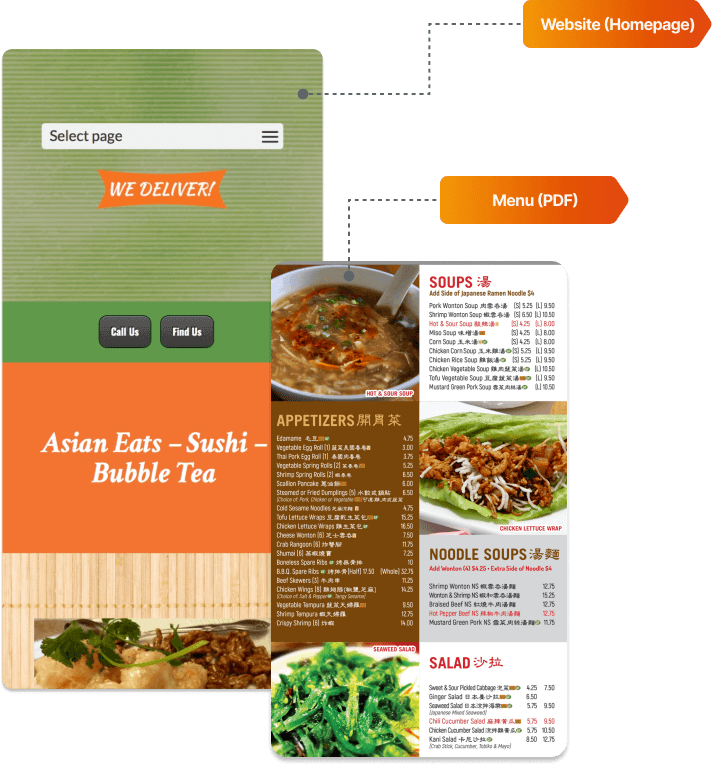
An outdated and visually overwhelming menu lacking images and ability to search/filter led to browsing friction.
Promo/update visibility
With in-store interactions as the primary channel, the business struggled to effectively communicate promos and updates.
PREVIOUS MENU & WEBSITE
RESEARCH PROCESS
Analytics
Conducted user interviews, task monitoring and a survey with customers and a couple employees to better understand the pain-points and overall flow of ordering food via phone.
Market research
Conducted a competitive audit of local business' websites/food ordering experiences to identify best practices and understand conventional food ordering flows.
User journey mapping
Using data collected from task monitoring and interviews, identify different types of users and their flow to order food from Shangri-la.
Usability testing
Led moderated usability testing of designs in order to polish designs further addressing potential issues and enhance food ordering experience.
INSIGHTS
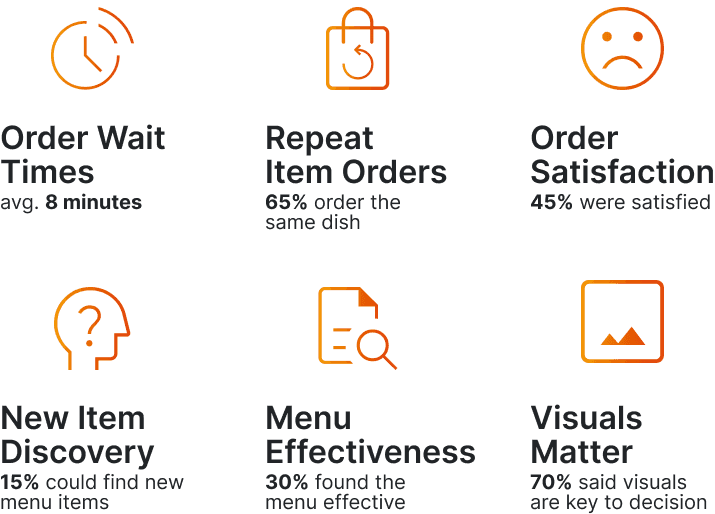
Quantitative findings
While most customers defaulted to repeat orders, poor menu clarity, limited visuals, and long wait times reduced discovery and overall satisfaction.
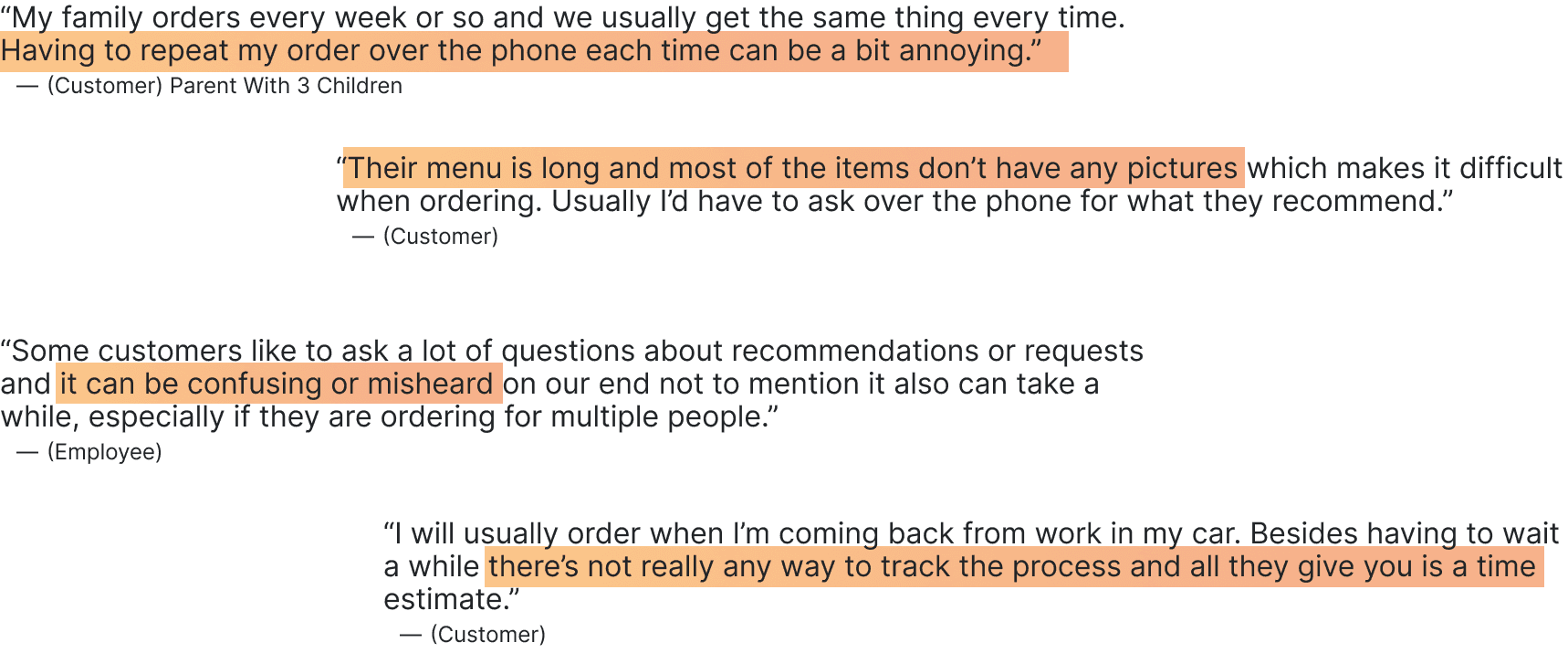
Qualitative findings
The phone-based ordering experience creates friction through repetition, poor menu clarity, communication errors, and lack of order transparency, impacting both customer satisfaction and operational efficiency.
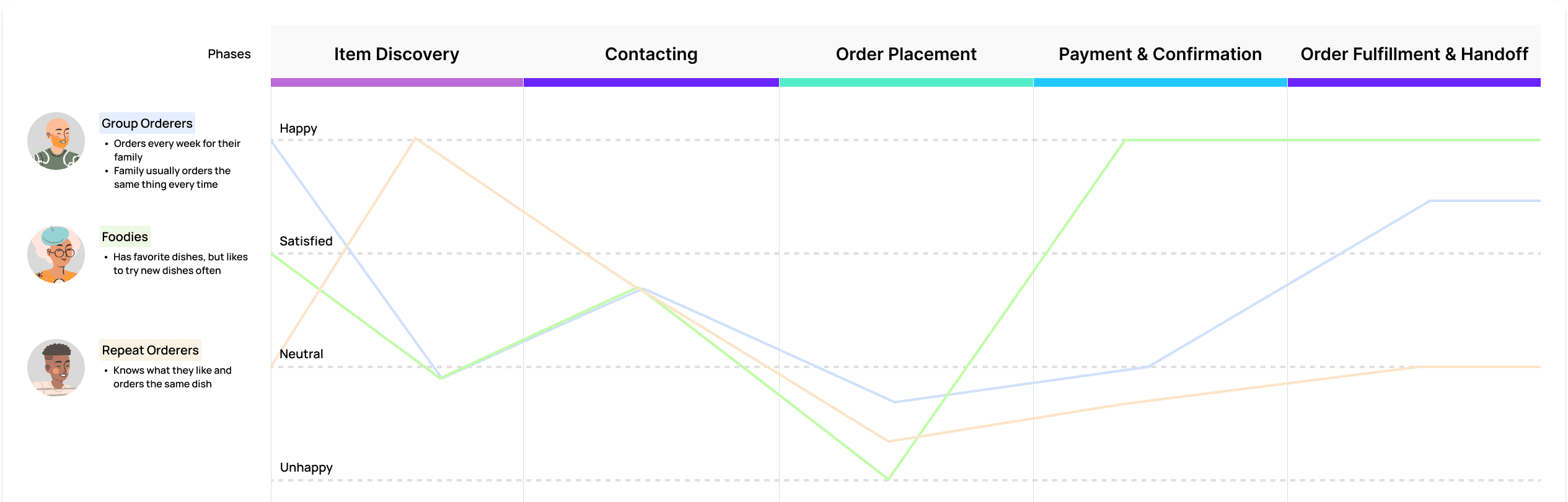
Mapping out the experience for different types of customers
Customers vary in experience, exploration level, and group size, creating diverse needs. Most friction occured during item discovery, contact, and ordering.
Key findings
Lack of personalized food expereince
Customers missed staff remembering preferences and offering recommendations, enhancing both efficiency and experience.
All traffic through phone
Relying solely on phone orders overwhelmed employees and frustrated customers, causing long wait times and difficulty requesting item changes.
Inaccurate order progress
Pickup and delivery times were shared as inaccurate ranges over the phone, with no order progress updates, leading to customer frustration.
SOLUTION
A dedicated food ordering app allowing for refined menu exploration, streamlined ordering process and inclusion of easy to find marketing + important updates.
Streamlined food ordering and info discovery from the start
The homepage highlights promotions, favorites, recent orders, and chef’s specials for streamlined reordering and a personalized experience. Ability to still call the store in the sticky bar.
Personalized menu item search experience
Search or filter to find food items that meet your cost, dietary, spice level and dish size needs. Personalizing customers shopping journey.
Adding key info to food item pages
Food item pages include info surrounding ingredients and dietary + allergy info. Also contains an image at all times so there are no suprises to what they are getting.
Streamlined checkout with certainty
The checkout experience supports delivery/pickup customization, including instructions and scheduling, with live updates to keep customers informed.
DESIGN DECISIONS
Design should accurately reflect branding of the restaurant
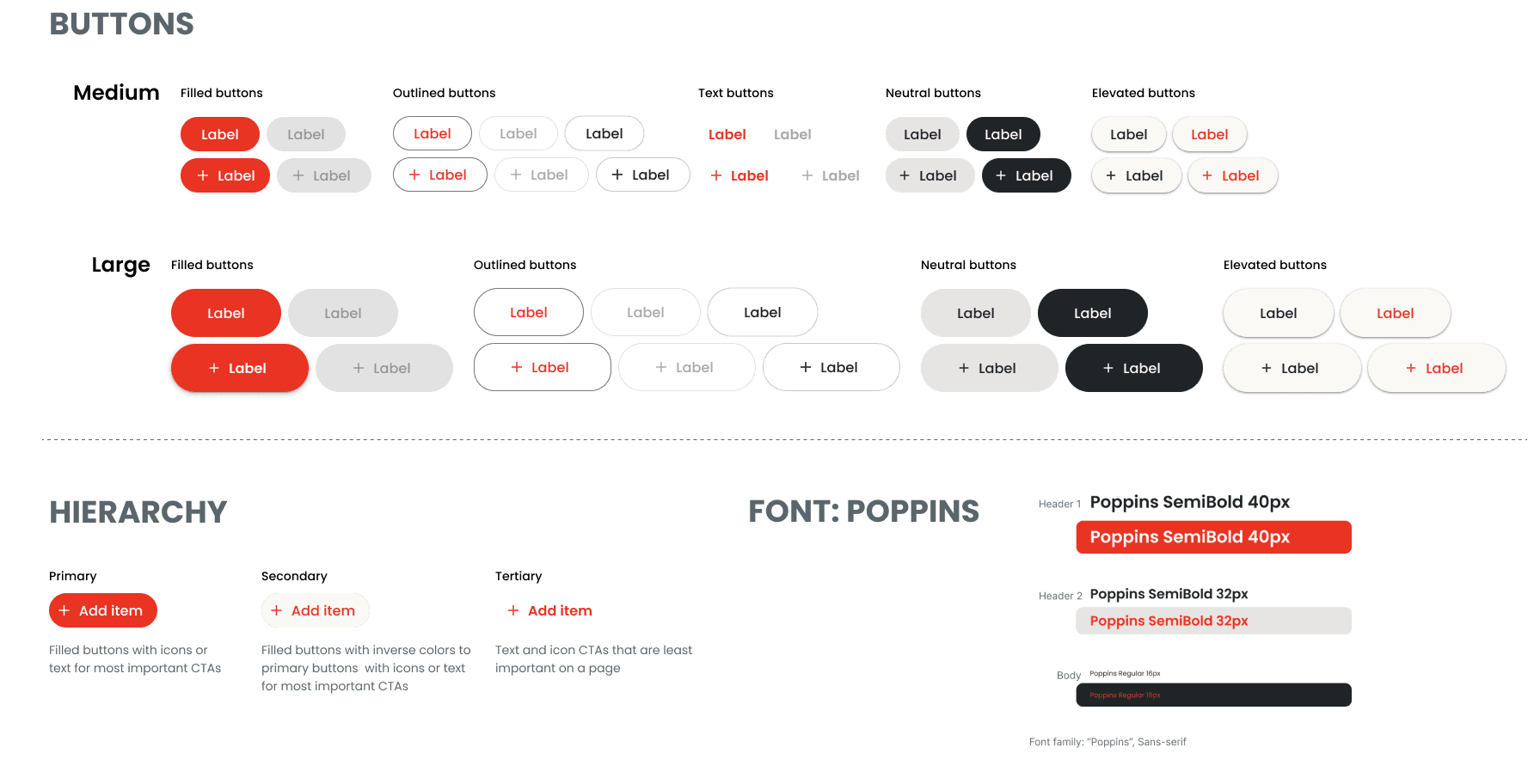
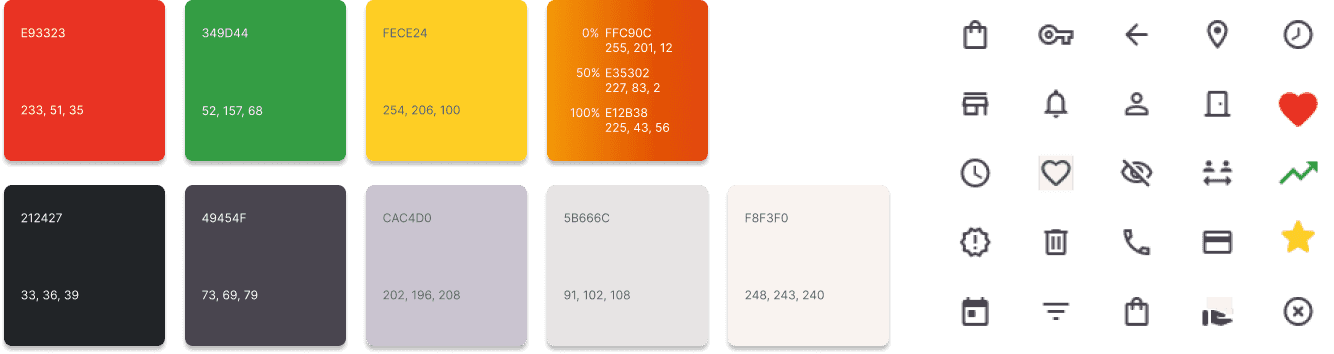
Business wanted to have their app feel like an extension of their restaurant and not a separate entity. Red color was used within the design to bring their brand over into key CTAs and actions.
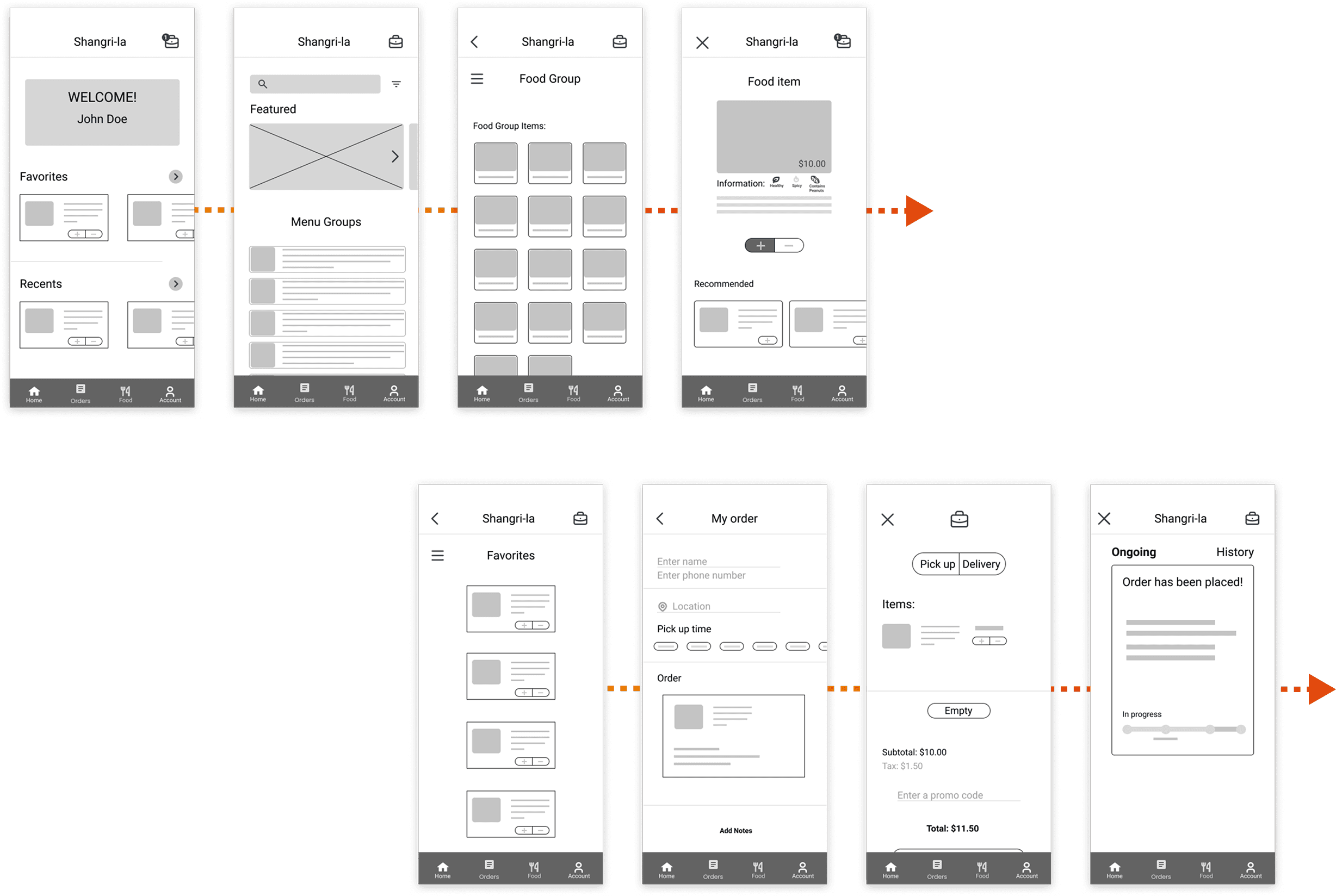
Low-fi designs were put through moderated usability tests to refine designs
Feedback showed that: customers still wanted a quick way to call the restaurant, business wanted an elevated approach to displaying updates and promos.
Streamlined food + promo access
Balancing business needs (promotions/updates) with customer flows like reordering and exploring favorites was key to maintaining a fast, enjoyable experience.
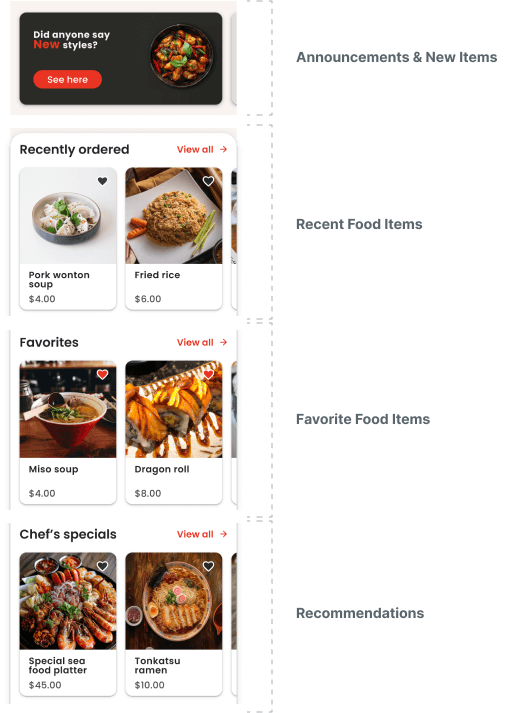
Condensed information display
Condensed categories into separate pages, showing only categories upfront to reduce friction and improve browsing speed.
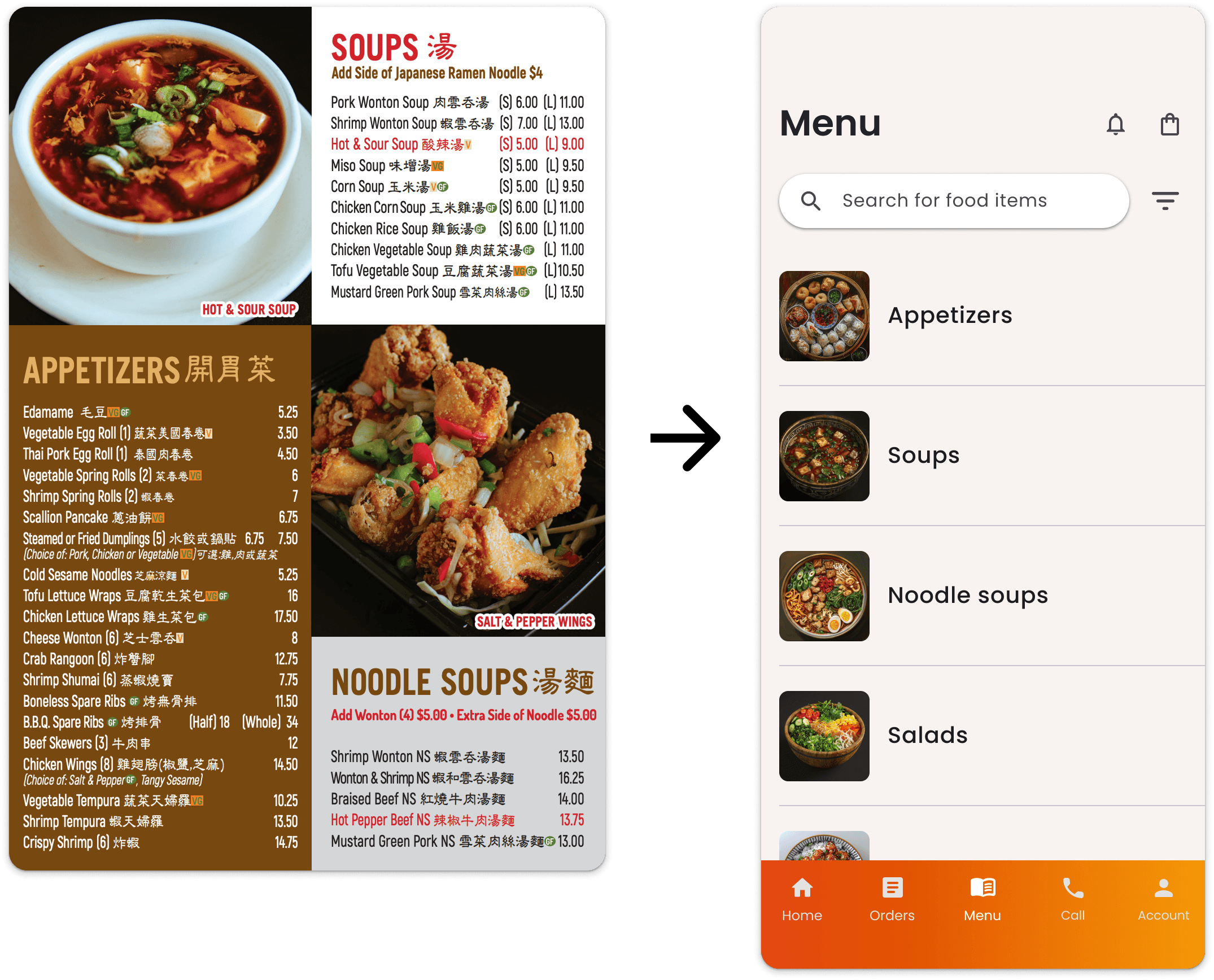
Tailored filters to improve search and integrate personalization
Research identified key information priorities—price, dietary preferences, spice level, and portion size—while featured sections highlight popular and staff-recommended items to mirror in-store experiences.
Filters within menu page

OUTCOME
Guided moderated usability testing was conducted using the prototypes that were created. With the designs being made based on data collected from customer interviews we received positive feedback.
Order speed
Order speed in A/B testing with 10 customers saw an average decrease in time by 5 minutes.
(Not counting "recently ordered" order flow)
Food item discovery
All participants preferred this experience vs the current experience in the PDF. Reducing time to find specific items by 70% an average.
Satisfaction rates
Majority of participants would strongly agree this was a better ordering experience vs the current. With 100% having a positive experience using this version.